Reviews
Part of How B2B content marketing works for a business team
B2B content marketing mistakes that experienced operators still make
B2B content marketing mistakes in 2027 include personas, duplicate intent, generic summaries, uncontrolled claims, poor distribution, vanity traffic, and decay.
What to take away
- A large library can conceal a small useful publication when several pages serve one intent without distinct value.
- Commercial content needs recognizable presentation, current support for its claims, and correction when evidence changes.
- Traffic is an observation, not a complete measure of buyer usefulness, qualified account progress, or commercial value.
B2B content marketing mistakes often survive because teams report production and traffic without inspecting usefulness, evidence, or commercial fit. Review real assets and reader behavior before blaming the writer or channel. Several problems can occur in one page, so diagnose the system as well as the output.
Mistake 1: writing for a broad persona label
A title such as executive or marketer does not identify the situation, decision, risk, or evidence needed. Fix it by naming the business context, buying role, question, promise, and next useful action. Test the definition with buyers, non-buyers, and sellers.
Mistake 2: creating duplicate intent
Google's spam policies identify scaled content made mainly to manipulate rankings whether people, automation, or a combination produced it. Consolidate or differentiate repeated intent based on reader value, not wording changes.
Several pages may answer the same query with different wording and no distinct value. Map content by decision and search intent, then merge, redirect, or differentiate. Google warns against producing many topics or variations mainly to gain search visits. Distinct value is what separates real B2B content marketing examples from another version of the same page.
Mistake 3: summarizing instead of contributing
A polished recap of existing sources gives readers little reason to remember the company. Add research, expert practice, product evidence, tools, or a synthesis that resolves a genuine decision. Cite primary sources and explain limits. Do not disguise generated paraphrase as original expertise.
Mistake 4: using claims without controls
The FTC's native-advertising guide says commercial material can be deceptive when people cannot recognize it as advertising. Review the presentation, placement, label, claim support, and applicable market rules before distribution.
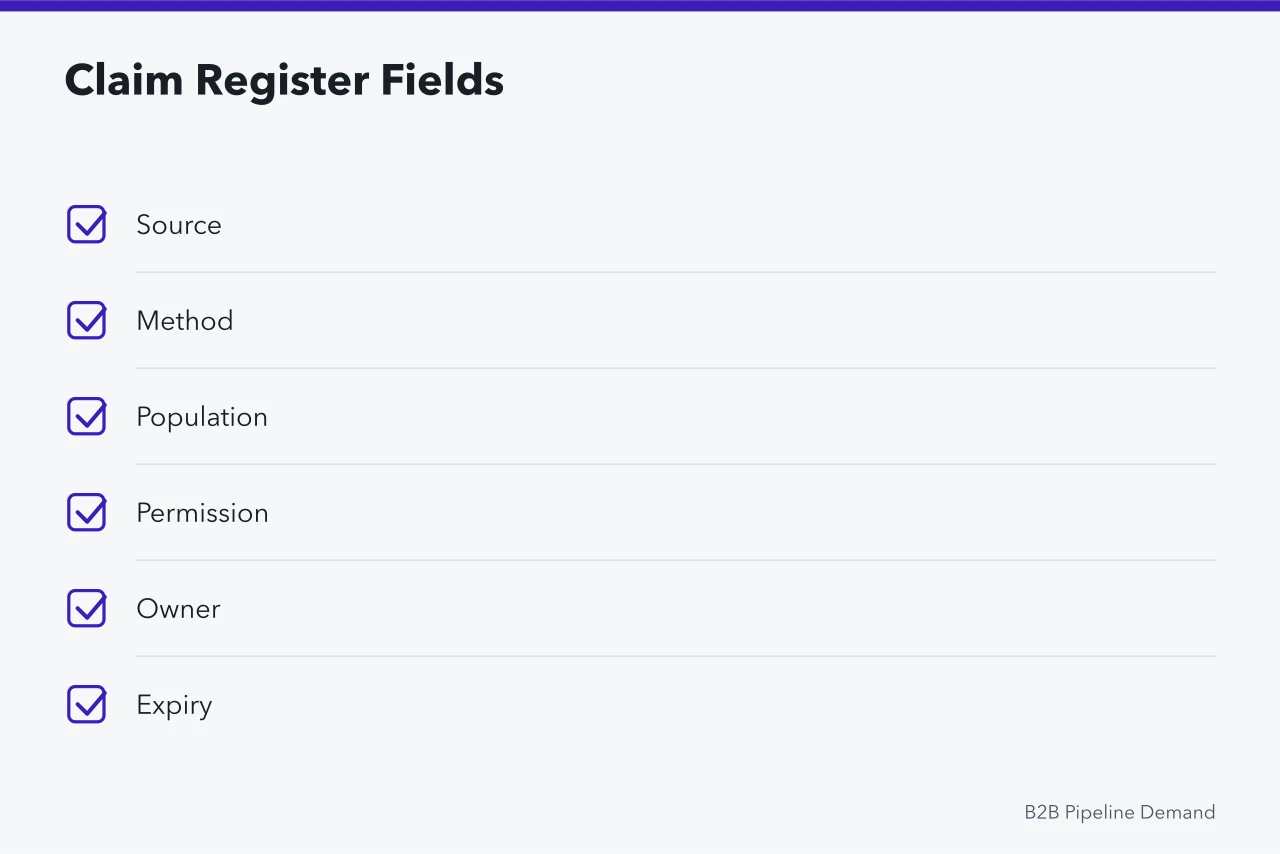
Customer outcomes, comparisons, quotations, and product capabilities can become inaccurate or misleading. Maintain an approved claim register with source, method, population, permission, owner, and expiry. FTC guidance requires truthful, non-deceptive, evidence-based claims. Correct or withdraw errors visibly.
Mistake 5: publishing without distribution
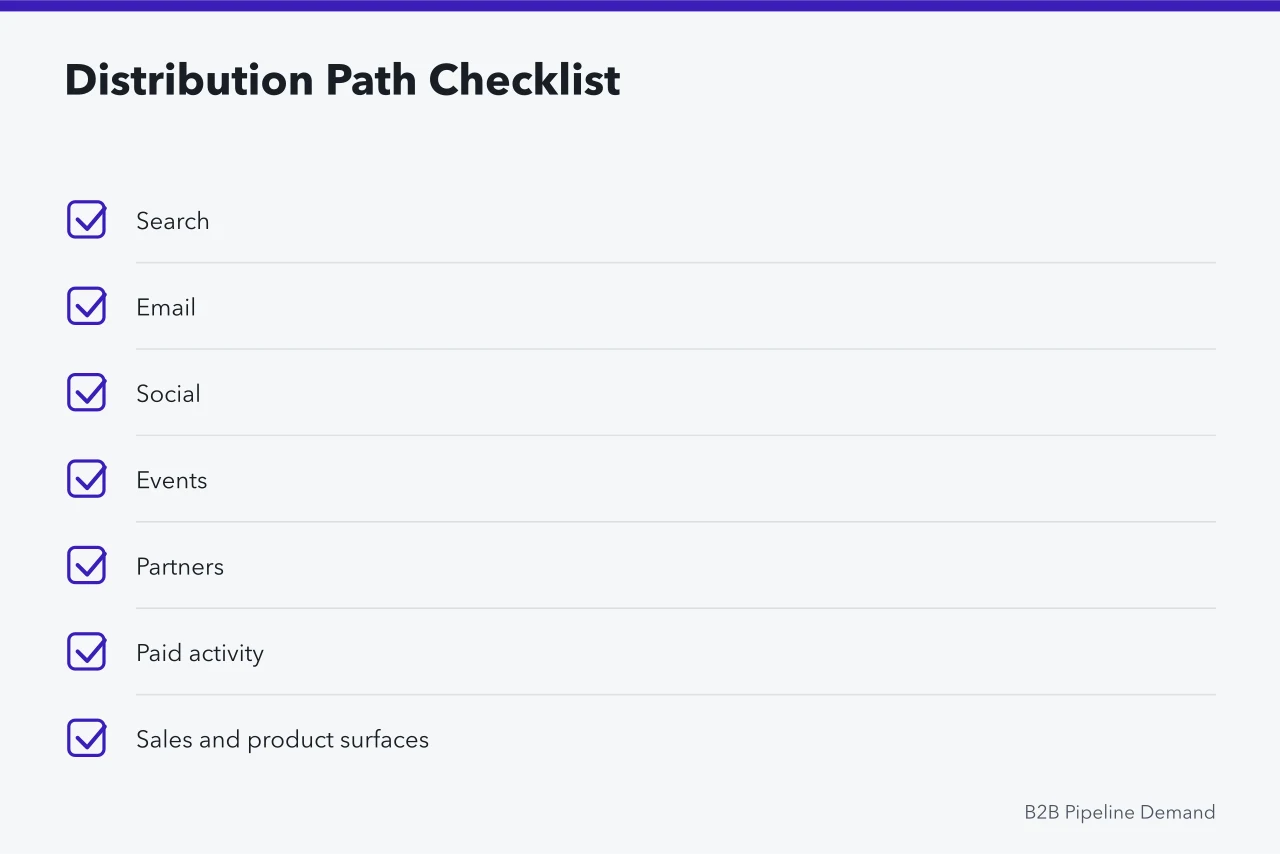
Organic discovery may take time and never reach every buying role. Plan search, email, social, events, partners, paid activity, sales, and product surfaces with the brief. Adapt the presentation to each channel. Give every path an owner, measure, budget, and stop condition. B2B email marketing is the path most often left to a template.
Mistake 6: reporting traffic as value
Visits can include irrelevant readers, staff, bots, or people with no commercial fit. Define intended reach, useful consumption, qualified account action, sales use, customer outcome, and economics. Preserve each platform's scope and missing data, then reconcile rather than collapse the reports.
Mistake 7: leaving content to decay
Products, laws, people, prices, evidence, and recommendations change. Set review frequency from risk and volatility, not one annual rule. Refresh substantively, consolidate duplication, archive obsolete work, and keep correction records. Changing the displayed year without reviewing the content creates false freshness.
Mistake repair map
| Mistake | Repair | Stop signal |
|---|---|---|
| Duplicate intent | Merge or add distinct value | Only wording differs |
| Commodity summary | Original evidence or practice | No reason to choose it |
| Uncontrolled claim | Source, permission, limit, owner | Support is missing |
| Traffic-only report | Reader and commercial measures | Audience fit is unknown |
Prove the correction
The GAO data reliability guide treats reliability as fitness for an intended use and requires documented assessment. Use that test for the content data behind these repairs; the federal guide does not certify it.
The FTC advertising substantiation policy requires a reasonable basis before objective advertising claims are disseminated. Apply that U.S. rule to public performance statements, with advice for the actual facts. The same failures at plan level are collected in B2B marketing strategy mistakes.
Common questions
Does duplicate content always require deletion?
No. Keep pages separate when they serve distinct audiences, decisions, evidence, or actions. Otherwise consolidate and use a redirect or canonical treatment.
Why is traffic a weak content goal?
Traffic can include people and sessions unrelated to the intended buyer or outcome. It also says little about comprehension, account progress, sales use, cost, or causal effect.
How can a team prevent content decay?
Assign review frequency from factual volatility and business risk, maintain source and claim records, monitor useful signals, and fund refresh, correction, archive, and retirement work.