Strategy
Part of B2B SAAS marketing: the version that survives contact with reality
How to improve B2B SaaS marketing with lifecycle fixes
How to improve B2B SaaS marketing by finding lifecycle bottlenecks and testing fixes to positioning, pricing, activation, handoffs, and retention.
What to take away
- Map the lifecycle and fix the earliest material transition failure instead of buying more traffic for a weak promise, product path, or customer segment.
- Use funnel and activation analysis as diagnostic evidence, while keeping analytics users, business accounts, customer value, and causation separate.
- Test one repair with a defined cohort, outcome, window, retention guardrails, full cost, customer experience, and a recorded stop rule.
Learning how to improve B2B SaaS marketing starts with a lifecycle diagnosis, not a larger campaign calendar. Split evidence by segment, use case, plan, acquisition source, sales motion, implementation cohort, region, and customer age.
Find the first broken transition
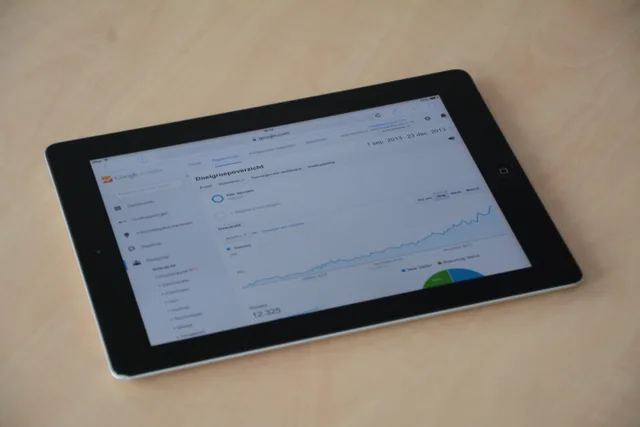
Google Analytics documents open and closed funnel explorations, ordered steps, time constraints, breakdowns, and abandonment behavior in a configured property. Use that scope to diagnose digital steps, not to assume an Analytics user equals a business account, an activation, an opportunity, or a retained customer.
Lifecycle Transition Map
- Eligible audience
- Qualified response
- Trial or opportunity
- Activation
- Purchase
- Onboarding
- Recurring value, renewal, expansion
- Map eligible audience, qualified response, trial or opportunity, activation, purchase, onboarding, recurring value, renewal, and expansion.
- Define entry, exit, owner, time window, and failure reason for each transition.
- Identify the constraint. More traffic will not repair an unclear product, poor activation, or an unsupported customer segment.
Retest segment and positioning
Interview retained customers, churned accounts, lost buyers, users, sellers, and service teams. Compare the promised problem and value with what the product actually delivers. Tighten exclusions. Rewrite positioning around a consequential workflow, distinct mechanism, evidence, tradeoffs, and cases where the product does not fit. Those choices belong to the B2B marketing strategy, not to a campaign calendar.
Promised vs Delivered Value
Promised
- Problem
- Stated pain
- Value
- Marketing claim
- Fit
- Broad appeal
- Evidence
- Assertion
Delivered
- Problem
- Actual pain
- Value
- Product outcome
- Fit
- Tight exclusions
- Evidence
- Proof and tradeoffs
Clarify pricing and the buying route
Audit whether customers understand the value metric, plans, included usage, overages, contract, support, implementation, billing, and cancellation. Test comprehension and estimation before testing discounts. Route complex buyers to informed help without hiding the entry point or the material cost conditions.
Pricing Comprehension Audit
- Value metric
- Plans
- Included usage
- Overages
- Contract and support
- Implementation and billing
- Cancellation
Improve activation with product evidence
Amplitude's November 2025 activation guide recommends defining the customer value moment, agreeing a metric, and testing whether the behavior relates to later retention. Treat it as vendor guidance and validate the event, segment, account roles, time window, instrumentation, false positives, and customer meaning in your own data.
Define the first meaningful outcome by segment, then inspect prerequisites, setup, invitations, integrations, guidance, errors, human help, and time to value. Compare retained and churned cohorts. Remove steps that serve internal tracking rather than customer progress. Name the metrics: activation rate, invite rate, time to first value, and 90-day retention.
Repair the human handoff
Send sellers and success managers the account, user role, workflow, achieved value, question, missing requirement, and reason for contact. Define response levels and stop conditions. Each handoff is a stage transition in the B2B sales funnels the company already runs. Collect accepted, rejected, contacted, qualified, converted, and disqualified reasons.
Test one change with retention guardrails
Choose one transition and predefine the cohort, outcome, guardrails, sample expectation, window, and stop rule. Test a positioning claim, pricing explanation, offer, trial step, onboarding route, seller response, or customer message. Judge activation, fit, support, early retention, margin, and customer experience beside immediate conversion.
Set the activation baseline from the median rate of the last two quarterly cohorts. Set the 90-day retention baseline from the share of activated accounts still active at day 90.
Suppose a team targets trial-to-first-value. Cohort: 300 new signups over 8 weeks. Metric: activation rate and 90-day retention. Window: 90 days. Result: activation moves from 25 to 32 percent, and 90-day retention for activated accounts moves from 80 to 85 percent. Treat these as illustrative, not forecasts.
Preserve the failed hypotheses as well as the winning version. They stop another team from repeating an expensive experiment under a different label.
SaaS improvement priority record
Use this record to pick one repair at a time. Start with the row that matches your current data, then write the evidence you will watch.
| Observed failure | First repair | Evidence of progress |
|---|---|---|
| Traffic without fit | Segment and exclusion rule | Qualified cohort improves |
| Signup without value | Activation path and assistance | Time to value improves |
| Noisy handoff | Reason, context, owner, response | Accepted actions improve |
| Conversion with churn | Promise, onboarding, customer fit | Mature retention improves |
When a repair requires new tooling, review the choice against the GOV.UK technology selection guidance. Add the common B2B SaaS marketing questions on trials and activation, and the CISA software acquisition fact sheet for data control, security, deployment, and ownership cost.
Common questions
What should a B2B SaaS team improve first?
Fix the earliest verified fit, promise, evaluation, activation, handoff, onboarding, billing, support, or retention failure that constrains customer value.
Should a SaaS team always increase trial conversion?
No. Higher conversion can admit poor-fit or unprepared customers. Judge it with activation, retention, support, refunds, margin, and experience.
How long should an improvement test run?
Set a window that covers the target transition, product behavior, sales or success response, billing lag, and enough retention evidence.